
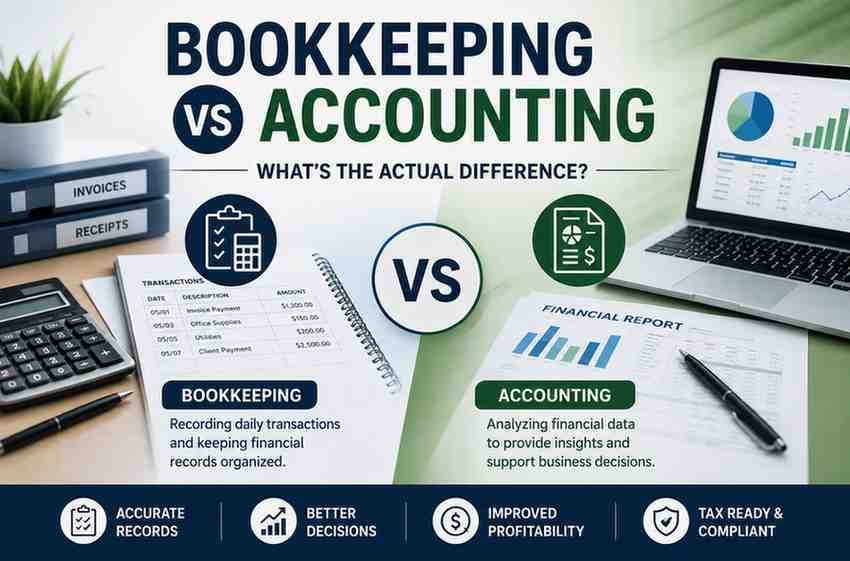
What is the difference between bookkeeping vs accounting? Bookkeeping involves recording daily financial transactions like payments, invoices, and receipts. Accounting uses that financial information to prepare reports, review business performance, and support financial decisions.
Business owners tend to believe that bookkeeping and accounting represent the same work. The two functions work together for business financial management, yet maintain their individual financial management functions.
Table of Contents
Bookkeeping and accounting, as separate functions, enable businesses to control cash resources, assess profitability, and develop effective financial strategies. Accounting and bookkeeping represent essential financial knowledge because they enable business owners to prevent monetary errors while they expand their enterprises.
What Is Bookkeeping?
Bookkeeping functions through the creation of financial records, which document all business transactions that occur throughout each day. The organization requires companies to maintain precise records of all payments and expenses, invoices, and deposits.
Bookkeeping includes:
- Recording sales and income
- Tracking expenses
- Managing invoices
- Organizing receipts
- Monitoring payroll records
- Reconciling bank accounts
- Tracking accounts payable and receivable
Bookkeeping services exist to establish precise financial documentation, which enables businesses to maintain their complete financial records in an orderly manner.
Businesses today accomplish their financial administration tasks more efficiently through the use of online bookkeeping services and cloud accounting software, which decreases their need for manual bookkeeping operations.
What Does a Bookkeeper Do?
A bookkeeper manages the daily financial activity of a business. Their responsibilities often include:
- Entering transactions into accounting software
- Categorizing expenses correctly
- Managing customer invoices
- Tracking unpaid bills
- Performing bank reconciliations
- Organizing financial documents
- Supporting payroll processing
Accurate small business bookkeeping creates a reliable financial foundation for reporting and tax preparation.
What Is Accounting?
Accounting focuses on the analysis and interpretation of financial information. While bookkeeping records numbers, accounting explains what those numbers mean.
Professional accounting services help businesses understand:
- Profitability
- Business performance
- Cash flow trends
- Financial risks
- Tax obligations
- Growth opportunities
Accountants use bookkeeping records to prepare financial reports and provide strategic financial guidance.
What Does an Accountant Do?
An accountant reviews financial data and helps businesses make informed decisions.
Common accounting responsibilities include:
- Preparing financial statements
- Creating profit and loss reports
- Managing tax preparation
- Forecasting future revenue
- Analyzing expenses and profit margins
- Advising on financial planning
- Supporting budgeting decisions
Unlike bookkeeping, accounting involves financial analysis, planning, and interpretation of financial data.
Bookkeeping vs Accounting
The main difference between bookkeeping and accounting is simple:
- Bookkeeping records financial activity.
- Accounting analyzes financial activity.
A bookkeeper tracks transactions and maintains financial records. An accountant reviews these records to help guide business decisions.
| Bookkeeping | Accounting |
|---|---|
| Records transactions | Analyzes financial data |
| Handles daily financial tasks | Focuses on strategy and planning |
| Maintains financial records | Creates financial reports |
| Organizes invoices and expenses | Advises on taxes and growth |
| Tracks money movement | Interprets business performance |
Both bookkeeping and accounting are important for your business.
Why Accounting and Bookkeeping Matter
Why Bookkeeping Matters in Business
Without proper bookkeeping, businesses often struggle with:
- Missing financial records
- Cash flow confusion
- Tax preparation issues
- Inaccurate expense tracking
- Late payments and invoices
Reliable bookkeeping services for small businesses help companies stay financially organized and prepared throughout the year.
Why Accounting Matters in Business
Accounting enables businesses to understand their financial performance and make informed decisions.
Good accounting can help businesses:
- Improve profitability
- Reduce unnecessary expenses
- Prepare for taxes
- Build accurate budgets
- Plan for growth
- Monitor financial trends
Without proper accounting, businesses can make decisions without understanding the full financial system.
Bookkeeping and Accounting Work Together
The two fields of bookkeeping and accounting work together to support their functions.
Bookkeepers establish organized financial documents that accountants use to create essential financial reports about a company’s operations. Accountants need accurate bookkeeping records to create reliable financial statements. Businesses need accounting services to gain a complete understanding of their financial position.
Effective bookkeeping and accounting services enable businesses to maintain their operational processes while generating profits and maintaining their financial health.
Final Thoughts
Every business owner needs to learn the difference between accounting and bookkeeping. Accounting exists to examine financial data, while bookkeeping exists to document all the financial activities of a business.
Financial management requires both roles to work together. Businesses need clean bookkeeping that maintains accurate records and accounting that reflects their operational results and future growth potential.
The practice of structured financial management through various methods, such as online bookkeeping services, accountant hiring, and cloud bookkeeping software, enables businesses to achieve financial stability and profitability while preparing for future expansion.
FAQs
What is the difference between bookkeeping and accounting?
Bookkeeping focuses on recording daily financial transactions, while accounting focuses on analyzing financial data and preparing reports.
Do small businesses need both bookkeeping and accounting?
Yes. Bookkeeping keeps financial records organized, and accounting helps businesses understand profits, expenses, and financial performance.
Can a bookkeeper prepare taxes?
A bookkeeper can organize financial records for tax preparation, but accountants usually handle tax filing and tax strategy.